
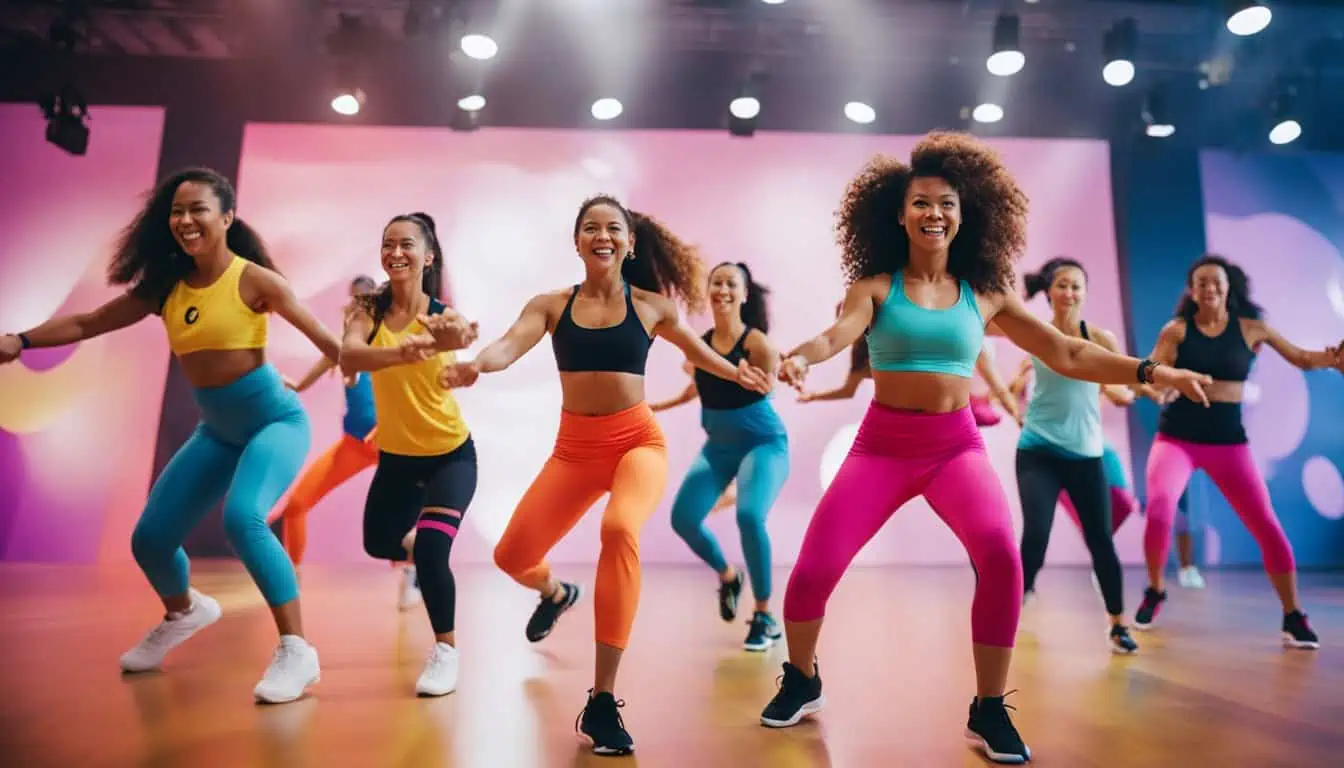
The relationship between music and exercise intensity is more precisely quantifiable than casual gym culture suggests. In Zumba classes singapore gyms deliver, the musical tempo measured in beats per minute and the choreographic complexity of movement sequences are the primary design variables that instructors use to manage class intensity across a session. Understanding these variables and how they interact to determine caloric demand helps members make more informed choices about class intensity and helps explain the measurable differences in physiological outcome between different Zumba sessions and instructors.
How Music BPM Drives Movement Intensity
The synchronisation between musical tempo and movement execution is one of the most consistently demonstrated phenomena in exercise science. When people exercise to music, their movement naturally entrains to the musical tempo, producing movement speeds that match the rhythm of the accompaniment.
BPM Ranges and Their Physiological Correlates
Different Latin music styles used in Zumba programming span a meaningful range of tempos that produce different movement speeds and corresponding cardiovascular demands. Merengue, characterised by a simple two-step pattern at tempos typically ranging from one hundred and twenty to one hundred and fifty beats per minute, drives faster leg movement and correspondingly higher cardiovascular demand than slower Latin styles. Cumbia, with its characteristic rhythmic pattern at eighty to one hundred beats per minute, allows more deliberate movement execution at lower cardiovascular intensity. Salsa, depending on the specific style from son to mambo, spans from moderate to high tempo ranges that drive intermediate to high cardiovascular demand.
A well-constructed Zumba class uses music BPM variation deliberately across its session arc to manage participant cardiovascular intensity through the warm-up, main training block, and cool-down phases. The warm-up uses lower BPM tracks that allow gradual cardiovascular elevation, the main training block alternates higher and moderate BPM tracks to create the interval-like intensity pattern that Zumba’s cardiovascular effectiveness depends on, and the cool-down uses progressively lower BPM selections that allow controlled cardiovascular descent.
The Motivational Synchrony Effect
Beyond the mechanical tempo-movement synchronisation, music in Zumba classes produces a motivational synchrony effect that drives higher effort than movement without musical accompaniment. The motivational properties of high-tempo music with positive valence include reduced perceived exertion at equivalent absolute effort levels, increased movement amplitude beyond what music-free movement produces, and delayed onset of fatigue perception that extends the duration of high-effort movement before the participant voluntarily reduces intensity.
These motivational effects of music on exercise performance are among the most robustly replicated findings in exercise psychology, and they provide a partial explanation for why Zumba produces higher caloric expenditure than many participants expect given its perceived low-effort social character.
Choreographic Complexity and Its Metabolic Implications
The complexity of Zumba choreography affects caloric demand through two independent mechanisms: the muscular and cardiovascular demands of the movement itself, and the cognitive processing demands of learning and executing complex movement sequences.
Spatial and Movement Complexity
Choreographic sequences that involve directional changes, multi-plane movements, simultaneous upper and lower body coordination, and larger spatial amplitudes engage more total muscle mass and require greater neuromuscular coordination than simple repeating movements in a single plane. Higher total muscle mass engagement produces higher metabolic demand, contributing directly to greater caloric expenditure per unit of time.
An instructor who designs Zumba choreography with deliberate spatial complexity, incorporating forward-backward and lateral movement alongside the rotational patterns of Latin dance, produces a more metabolically demanding class than equivalent-tempo choreography confined to simple bilateral stepping patterns.
True Fitness Singapore’s Zumba instructors apply the music selection and choreographic design principles that produce genuinely effective cardiovascular training outcomes alongside the enjoyable social experience that sustains consistent attendance. True Fitness Singapore delivers Zumba classes that reflect both the physiological science and the cultural authenticity of the format.
FAQs
Q. – I notice that some Zumba instructors at Singapore gyms make classes feel much more intense than others. Is this primarily due to music selection or choreography?
Ans. – Both factors contribute, and the most intensity-effective instructors manage both deliberately. Music BPM selection determines the baseline movement tempo and cardiovascular demand floor for each track. Choreographic complexity determines how fully the potential intensity of a given tempo is realised through the movement demands placed on participants. An instructor who selects high-tempo music but pairs it with simple choreography produces lower intensity than the tempo would suggest. An instructor who pairs moderate-tempo music with high-complexity, high-amplitude choreography produces greater intensity than the tempo alone would predict. The combination of both variables managed simultaneously by a skilled instructor produces the best intensity calibration.
Q. – Is there an optimal Zumba class length for maximising caloric expenditure without excessive fatigue?
Ans. – Sixty-minute Zumba classes represent the standard format that balances adequate session duration for meaningful cardiovascular training volume with a fatigue level that most participants manage without significant next-day recovery demand. Forty-five minute express formats produce approximately seventy to seventy-five percent of the caloric expenditure of a sixty-minute class while fitting more easily into lunch break schedules. Ninety-minute Zumba marathons, offered occasionally as special events at Singapore gyms, produce substantially higher total session caloric expenditure but require greater post-session recovery and are appropriate as occasional events rather than regular training format for most participants.
Q. – How does the caloric expenditure of a Zumba class compare to a treadmill session of equivalent duration?
Ans. – At moderate effort levels, a sixty-minute Zumba class and a sixty-minute moderate-pace treadmill session produce broadly comparable caloric expenditure, with Zumba’s interval-like intensity variation producing slightly higher post-exercise oxygen consumption in the hours following the session. The meaningful practical difference is not caloric equivalence but adherence: participants who find Zumba more enjoyable than treadmill running are more likely to attend consistently, producing higher cumulative weekly caloric expenditure from exercise regardless of the per-session equivalence.
Q. – My Zumba instructor rarely changes the music selection across sessions. Does music repetition affect the training benefit?
Ans. – Familiar music in exercise contexts produces both advantages and disadvantages. The advantage is that familiar tracks produce stronger anticipatory arousal and motivational engagement than unfamiliar tracks, because the emotional associations and rhythmic expectations of known music activate reward circuits more powerfully than novel music. The disadvantage is that choreographic familiarity with frequently repeated tracks reduces the cognitive processing demand of learning new movement patterns, which removes one component of Zumba’s neurological training stimulus. Most experienced Zumba instructors balance a core of familiar tracks that provide reliable motivational peaks with regular introduction of new material that maintains the learning challenge.
Q. – Can I use a fitness tracker to accurately measure caloric expenditure during Zumba?
Ans. – Wrist-based fitness trackers provide rough estimates of Zumba caloric expenditure that are more useful as relative session intensity indicators than as precise absolute caloric values. The accuracy limitations arise from the combined challenge of optical heart rate sensing during the arm movement of Zumba choreography, the population average metabolic equations that most trackers apply without individual calibration, and the difficulty these devices have characterising the intermittent intensity pattern of Zumba compared to steady-state activities for which they are better calibrated. Using your tracker’s Zumba session data to compare relative intensity between sessions and track trends over time is more appropriate than using the absolute caloric values for precise nutritional management decisions.
